© 2016 Snapping the Globe, L.L.C. All rights reserved.
My last day.
All of the planning, the travels and endless sightseeing was coming to an end here in Ho Chi Minh City.
Later in the evening, I would be leaving Ho Chi Minh City and Vietnam for the long trip home. Ho Chi Minh City to Singapore. Singapore to Narita, Japan. Narita to Minneapolis. Minneapolis to New York. New York to Richmond. Whew! It was going to be an exhausting trip, so knowing I was going to be out sightseeing all day, in the oppressive heat, I was concerned about being able to freshen up before heading to the airport. After contemplating making a move in the morning to a cheaper hotel or hostel, I explained my plight to the attendant at the front desk of the Lan Lan Hotel. Though they had not been all too friendly since I had arrived, I think she took pity on me. Offered a half-day’s rate with a departure of 6:00 in the evening meant that I could leave everything in my room and take a shower before my departure.
Since my hotel dilemma was no longer a problem, I was able to set out early and see what the city had to offer.
 The Mariamman Hindu Temple was only a couple of blocks away and was my first destination. A very colorful and interesting place, filled with vibrant deity sculptures, it serves the small community of Chinese and Vietnamese Tamil Hindus living in the city. This temple is rumored to have miraculous powers giving luck and wealth to those who worship within its walls and was filled with the devout as I walked through its doors.


 Built at the end of the 19th century, the building features a royal tower at the entrance which stands twelve meters high. To the left of the entrance sits the Gods and Goddesses, Shiva, Kali, Brahma and Vishnu and at an altar in the center of the temple is a statue of the Goddess Mariamman.
This was my first visit to a Hindu temple and I enjoyed visiting something very different than I had ever experienced. My favorite part, however, were the little ladies, fascinated with my make-up, who all wanted to take pictures with me.
 Leaving the Hindu temple, I noticed a pagoda on my map a few blocks away. The Xá Lợi Pagoda, the largest pagoda in Ho Chi Minh City, was built in 1956 and was the headquarters of Buddhism in South Vietnam. Best known for being raided and vandalized by the Army of the Republic of Vietnam Special Forces in 1963, it did not appear to be open and was not as lavish and ornate as some of the others I had seen on my journey, although it is known to have the highest bell tower in Vietnam. The grounds on which it sat left a lot to be desired, leaving me a bit disappointed that I had walked out of my way, unnecessarily, to visit. Snapping a few pictures, I then decided to make the long walk to the Jade Emperor Pagoda.

 One of the five most important shrines in Ho Chi Minh City, Jade Emperor Pagoda, also known as the Tortoise Pagoda, was built in 1909 in honor of the supreme Taoist god, the Jade Emperor or King of Heaven, Ngoc Hoang.

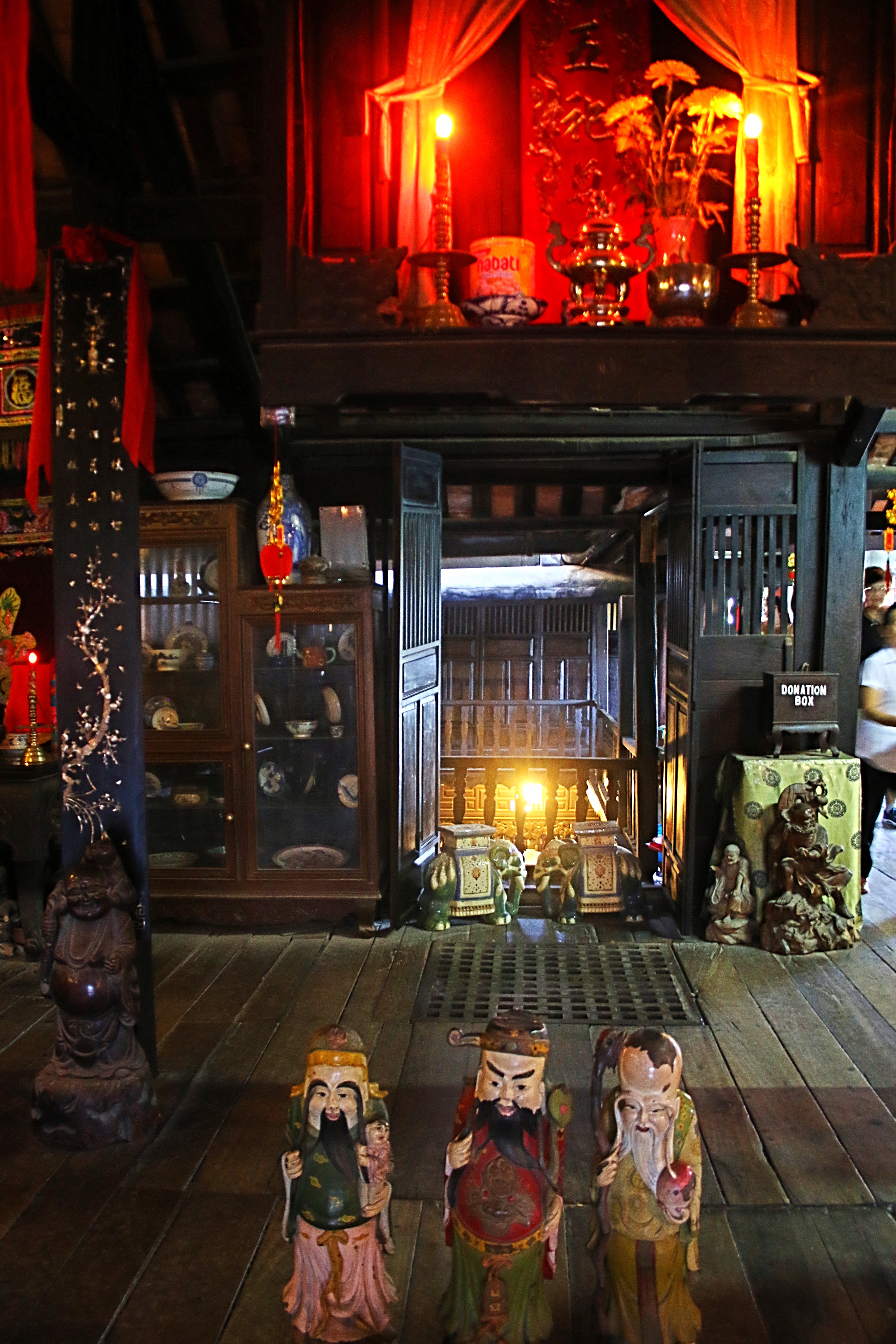
 When entering the temple, the first thing you notice is how dimly lit and smoky the atmosphere is as a great amount of incense is being burned to honor the gods. That being said, the main hall is very intriguing showcasing surrealistic divinities. Filled with exquisite woodcarvings, the main sanctuary features the Emperor Jade Chua Hoang (the God of the Heavens) flanked by his guardians, the Four Big Diamonds (aptly named because they are said to be as hard as diamonds) and menacing Taoist figures made of reinforced paper mache.


 Many locals visit the shrine, making offerings of flowers, lighting candles and joss sticks and the limited space in the temple can feel a little cramped. When departing the temple, stop by the small pond filled with turtles and check out the shells that have been inscribed with auspicious inscriptions.
Saigon Central City Post Office was my next stop, and no, I did not have to mail a letter!

The Saigon Central Post Office is one of the most renowned examples of architecture in Ho Chi Minh City and is a must see for any visitor. Designed by Gustave Eiffel, more commonly known for designing the Statue of Liberty and the Eiffel Tower, it is recognized as the grandest post office in all of Southeast Asia.

 Constructed between 1886 and 1891, the colonial ochre-colored facade is enhanced by arched windows, green wooden shutters and a beautiful clock which still works to this day. Inscribed on the facade are the names and faces of those responsible for the timepiece invention, including President of the United States, Benjamin Franklin, Italian inventor Alessandro Volta, British physicist Michael Faraday, French mathematician Andre-Marie Ampere and many others. There are also inscriptions dedicated to those responsible for discoveries and advances in the field of electricity.
 The gasp-worthy interior will, at first, remind you of a train station, which was indeed, Eiffel’s inspiration. Glancing upward, you will notice the high, looping arches and the spectacular dome of gilded capitals resting on green metal pillars. The intricately designed marble floors are representative of antique maps and the dark wood telephone booths that line the front of the building on each side, are reminders of the role the post office played before email and mobile phones were commonplace. Two maps of the region, which show telegraph lines that crisscross Vietnam and Cambodia and the Saigon region in 1992 are painted on the walls overhead. So beautiful and so French inspired, it is easy to forget where you really are. Don’t worry, the large portrait of Ho Chi Minh hangs high above everything at the far end of the building, reminding you that you are still in Vietnam.

In addition to being a fascinating glimpse into history, the Saigon Central Post Office is a fully functioning post office. Take the time to send a postcard to your family and friends using the old fashioned glue pots still in use for sticking stamps to letters. After sending off your missive, you can even do a little souvenir shopping in the two wings at the front of the building which sell everything from t-shirts and hats, to statues and books.
 My next stop was not far…just across the street. The Saigon Notre-Dame Basilica was a place that I very much wanted to visit. As I was leaving the Post Office and glancing at the clock, however, I noticed that it was half past noon. Verifying the opening time at Notre Dame’s entrance, I realized that I had just missed the morning hours and it would be two and a half more until it reopened. If I were to come back, I would have to be here exactly for the reopening. It would be tight. Just in case that I did not make it, I decided to take some pictures of the exterior and move on a few blocks to the Reunification Palace.

Formerly known as the Independence Palace, this landmark served as a presidential home and workplace and remains in the locals’ minds as a marked end to the war, when a North Vietnamese tank crashed its gates on April 30, 1975.

 The building has an open, modern feel and its functional rooms remind one of the many meetings and conferences that took place here. On the premises, however, you can view the F5E fighter plane which bombed the palace on April 8, 1975 and the tank which destroyed the palace gate.


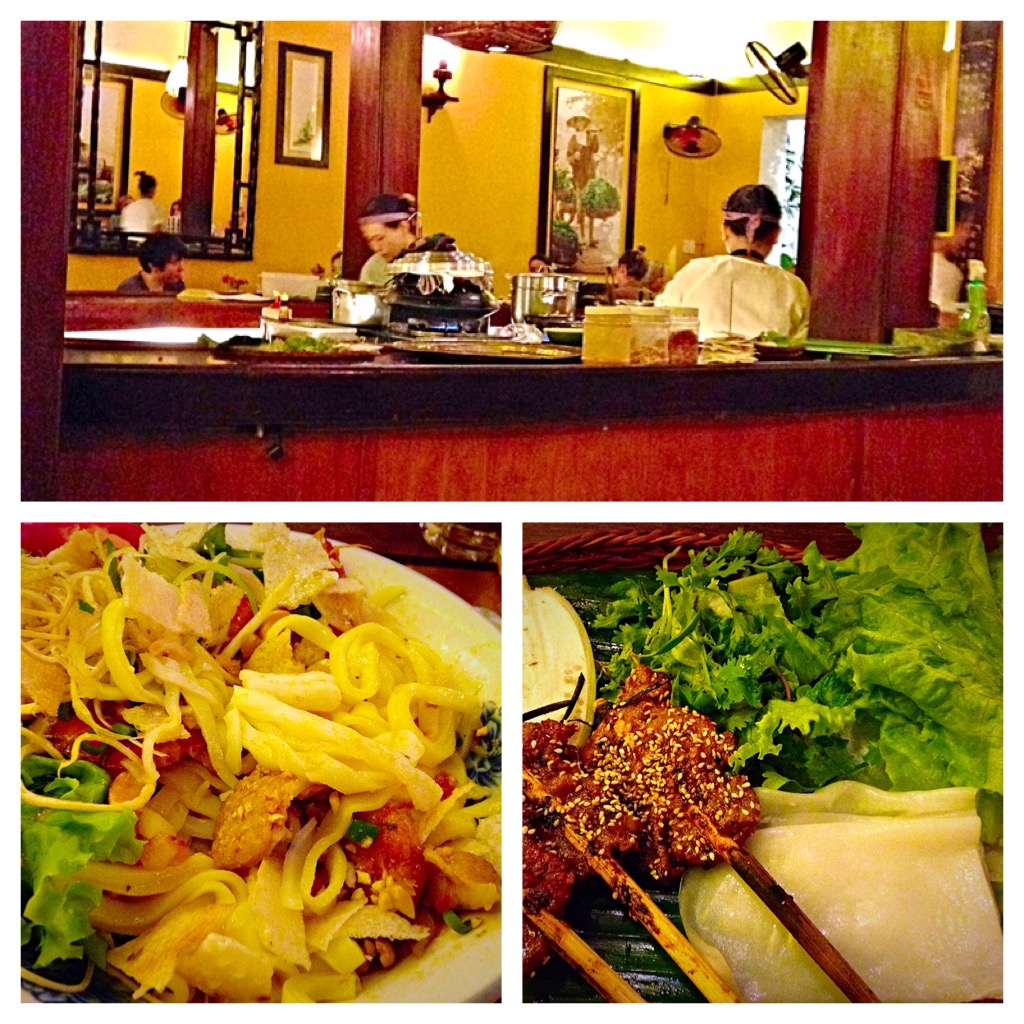
The Palace, taking up so much more time than I had planned, left me a little confused as what to do next. I was halfway between the Street Food Market, which was where I had planned to have lunch and Notre Dame Basilica. It wasn’t time for the churches reopening, yet I was starving. Deciding to have lunch and hope that I would have enough time to cover the distance back to the church, I headed toward the Street Food Market. After my lunch and analyzing the time, I deciding that I was hot and tired and really needed to purchase some souvenirs at the Ben Thanh Market. Unfortunately, Notre Dame was not meant to be.
Thankfully, it was a productive trip to the Ben Thanh Market where I managed to find some items that had eluded me during the trip.
Finally, it was back to my room and time to pack up for my departure. My suitcase was bursting, but I somehow managed to get everything into it and myself dressed and ready to go. Feeling fresh and revived, I made my way downstairs and decided to try using Uber, since a friend had reminded me as to how cheap it was in Ho Chi Minh City.
Now, I have to tell you. My luck with Uber has not been good in the past. Determined to make it work for me, I used the app and waited for my vehicle. Watching each of the cars that slowed near my hotel, I began thinking that this particular brand of car was not familiar to me. Slowly, I began to wonder… Yes, I realized that I had screwed up again. Not realizing that Moto X was indeed motorcycle transportation, not an actual car, this is what pulled in to pick me up. At this point, all I could do was laugh. This was a crazy end to my trip.
Somehow, with my purse on my shoulder, hat hanging from his handlebars, putting my tote between his legs and my suitcase between us, we were on our way. Feeling a few raindrops and holding on for dear life, I prayed that I made it to my flight unscathed and dry, though feeling the pollution sink into my pores, from the copious amounts of traffic, I realized that I would not be feeling as fresh as I had been just before my motorcycle journey.
Nevertheless, two hours later as I was boarding my flight and laughing at the absurdity of the beginning of the end of my long journey home, I only wished that I could have had a picture. Truly, had I become almost Vietnamese, traversing the streets on a motorbike with my luggage? Not quite…but it was a fitting end to the crazy adventure that I had sought out on my own. One that I will never forget.
For more pictures, check out Facebook, Snapping the Globe and Instagram, @snappingtheglobe.
Mariamman Hindu Temple
- Address: 45 Trương Định, Bến Thành, Quận 1, Hồ Chí Minh, Vietnam
- Hours: 0700-1900, daily.
- Admission: free
- Dress conservatively and remove shoes before entering.
Xá Lợi Pagoda
- http://www.chuaxaloi.vn/
- Address: 89B Bà Huyện Thanh Quan, 7th Ward, Quận 3, Ho Chi Minh City, Vietnam
- Hours: 0700-1900, daily.
- Admission: free
Jade Emperor Pagoda
- Address: 73 Mai Thi Luu St., Dakao Ward, District 1, Ho Chi Minh City, Vietnam
- Hours: 0700-1700, daily
- Admission: free
Saigon Central Post Office
- http://hcmpost.vn/Main1/Default.aspx
- Address: 2 Công xã Paris, Bến Nghé, Quận 1, Hồ Chí Minh, Vietnam
- Hours: 0700-1900
- Admission: free
Notre Dame Cathedral
- https://giothanhle.net/gio-le/nha-tho-duc-ba-sai-gon
- Address: 1, Công xã Paris, Bến Nghé, District 1, Ho Chi Minh, Vietnam
- Opening Hours: 0800-110 and 1500-1730, Monday through Saturday
- Mass Hours: Sunday, 0530, 0630, 0730, 0930, 1600, 1715, 1830
- Admission: free
Reunification Palace (Independence Palace)
- http://www.dinhdoclap.gov.vn/
- Address: 135 Nam Kỳ Khởi Nghĩa, Bến Thành, Quận 1, Hồ Chí Minh, Vietnam
- Hours: 0800-1100, 1300-1730
- Admission: 20,000 Vietnamese Dong (about USD .90)
Lan Lan Hotel
- http://lanlanhotel.com.vn/en/
- Address: 73-75 Thủ Khoa Huân, Bến Thành, Quận 1, Hồ Chí Minh, Vietnam


 Before long, we were pulling up to the dilapidated dock at Unicorn Island. Venturing up the path to a pavilion at a local bee farm, we were shown some of the wooden bee hives and one of the wooden frames filled with bees and a honeycomb. Our tour guide invited each of us to hold the frame…which, of course, I did!
 We were then invited to have a seat and enjoy tea, some of the honey and some tasty treats. After teatime was complete and we were exiting the pavilion, we were shown a cage, home to a boa constrictor. Not a native species, it was explained that the villagers keep the snake as a pet and to impress the tourists. The large snake was removed from its pen so that we could have a closer look. Feeling the snake’s skin, I was impressed with how smooth and cool to the touch it was and when my tour guide offered the snake to me, I decided to live in the moment and let him drape it around my neck, praying that it would not decide to strangle me! An exciting experience, I was extremely glad that I had allowed him to do so…where do you ever get the chance to have a boa constrictor around your neck?


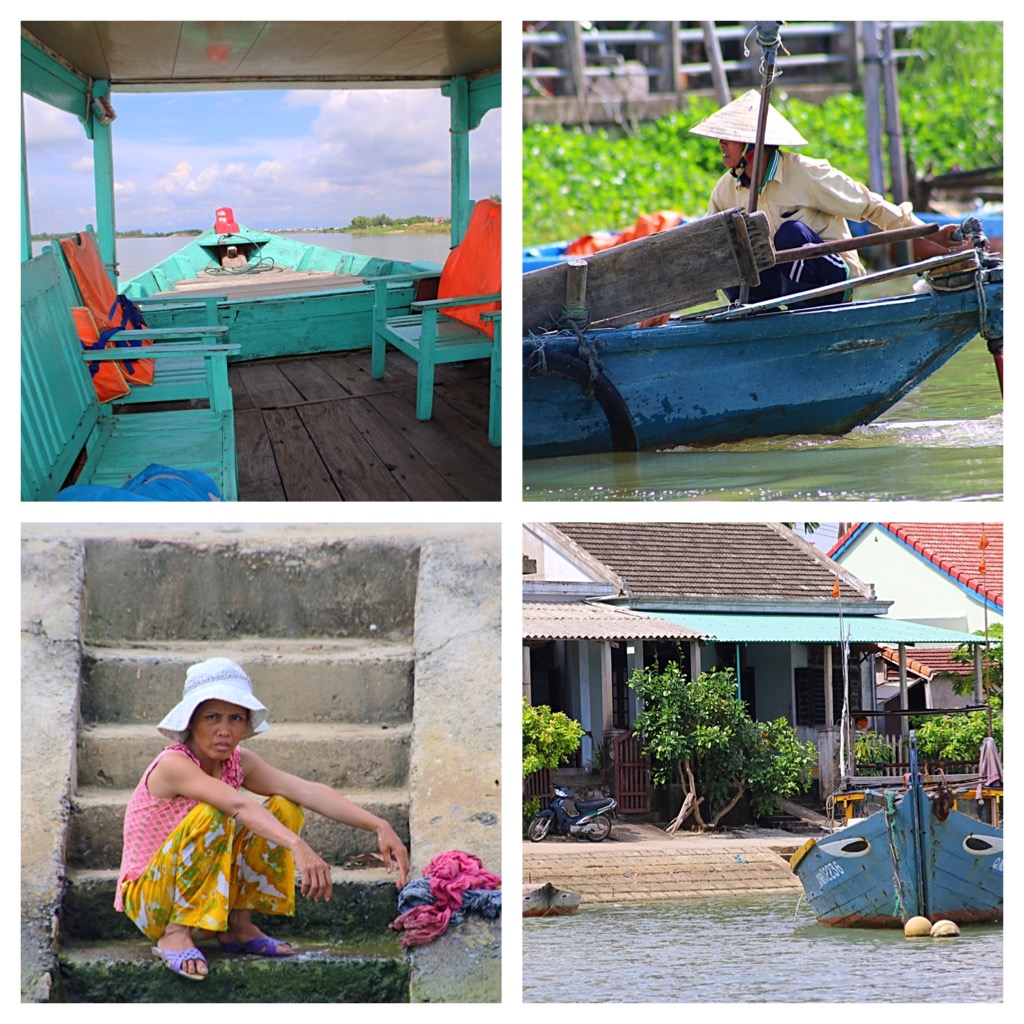
 Making our way down a palm-laden path, we found ourselves making our way down to another dock alongside a narrow canal on the Mekong Delta. Given conical hats to wear as we boarded sampans, we headed out into the shady waterways, sometimes making way for the many boats heading in the opposite direction down the same narrow canal. It was thrilling as we all jockeyed for space, but an amazing opportunity to get up-close and personal pictures of some of the villagers and their boats.


 After reluctantly surrendering our hats, we were ushered off of the sampan onto another dock onto our original boat. Motoring down a much larger waterway, we soon pulled up to another area on Unicorn Island. A few small drops of rain were starting to fall as we make our way to the coconut candy factory where keo dua, was made. One of the most popular candies in Vietnam, the chewy candy is consumed in Vietnam and also exported to nearby countries such as Cambodia and Thailand. We were able to witness all phases of production. Simple and tasty, the candy is made from coconut and sometimes mixed with other fruits like durian or roasted peanuts.

 Remembering that I purchased some of these candies last year while in Cambodia, I didn’t remember them fondly. The problem was that once I unwrapped the candy, there was a thin wrapping on the candy that I had a hard time getting completely off. Thinking that I wasn’t supposed to eat the thin wrapping, I decided that it was too complicated and I threw it out. Well, the one important thing that I learned at the candy factory was that the thin rice paper wrapping is to keep the outer paper from sticking to the candy…and it’s edible! Purchasing three packages, these were all eaten quickly once I was home, now knowing how to eat them!
 Our tour group and a few others were seated under a large pavilion and served elephant ear fish and many other fruits, vegetables and local dishes. The rain had returned and the air was thick and moist. After our lunch, we were invited to utilize the dozens of hammocks struck between the trees on the property or the bicycles available for our use. Deciding to walk around the property instead, I checked out the turtle ponds, the alligator pens and other caged animals.

 Finally, we were gathered and boarded on our original boat. Pulling through the palm covered and bamboo lined canal, we soon merged into the Mekong river and made our way back to the main terminal. Reboarding our tour bus, we were soon on our way back to Ho Chi Minh City.


 Arriving at the Ben Dinh tunnels, we were escorted by our tour guide through the hot, dense jungle to the areas where there are many displays of entryways to the tunnels. The first and most popular area is the small square hole in the ground which is uncovered by removing a square top covered in leaves. Here, a guard demonstrated how a person would fit into the hole and then hide himself under the ground. Visitors are invited to try their hand at fitting into the small opening.


 After entering the premises and walking down the pathway lined with apricot trees, we encountered a wall. It was interesting to note that this wall was placed here to keep evil spirits away as they can only travel in straight lines. If, by some chance, the spirit was able to navigate around the wall, they would encounter the reflecting pond directly in front of the house. Since spirits do not have a reflection, this was the second line of defense for the house.

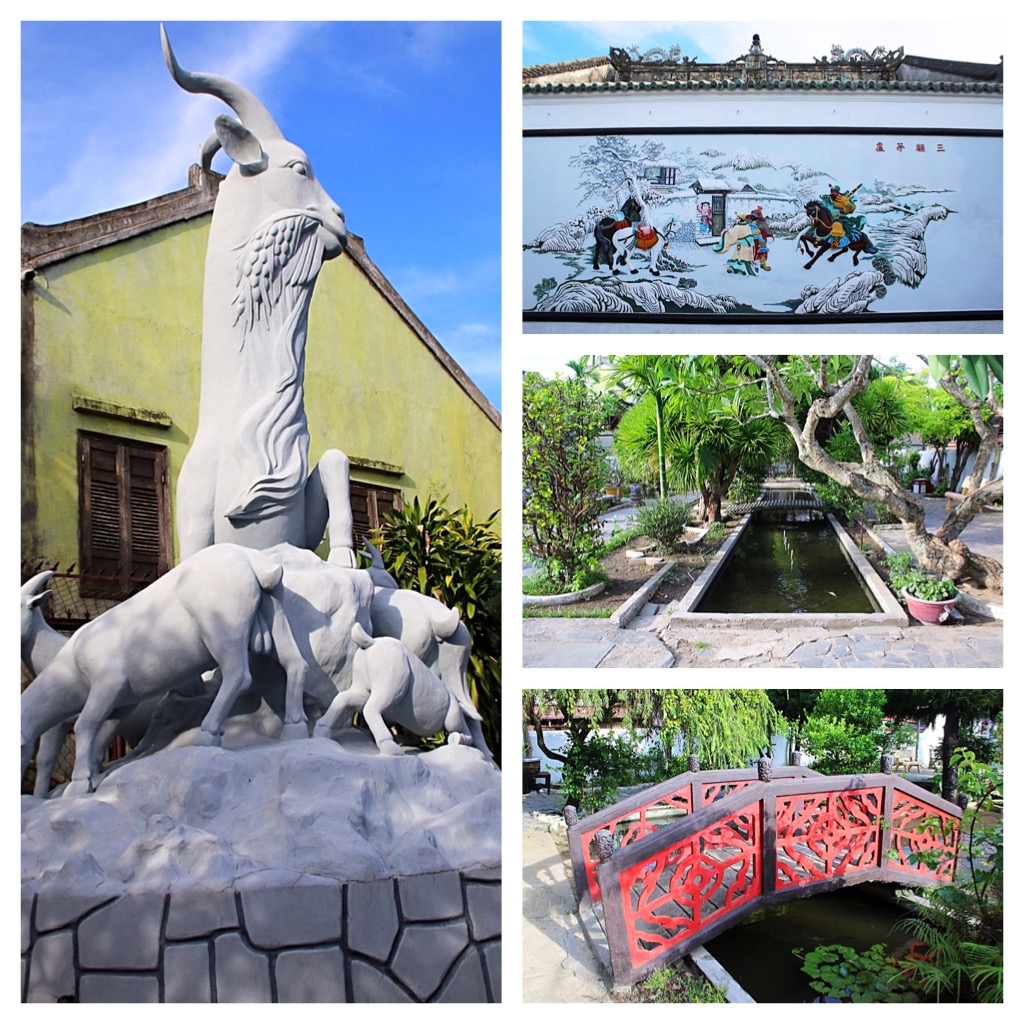
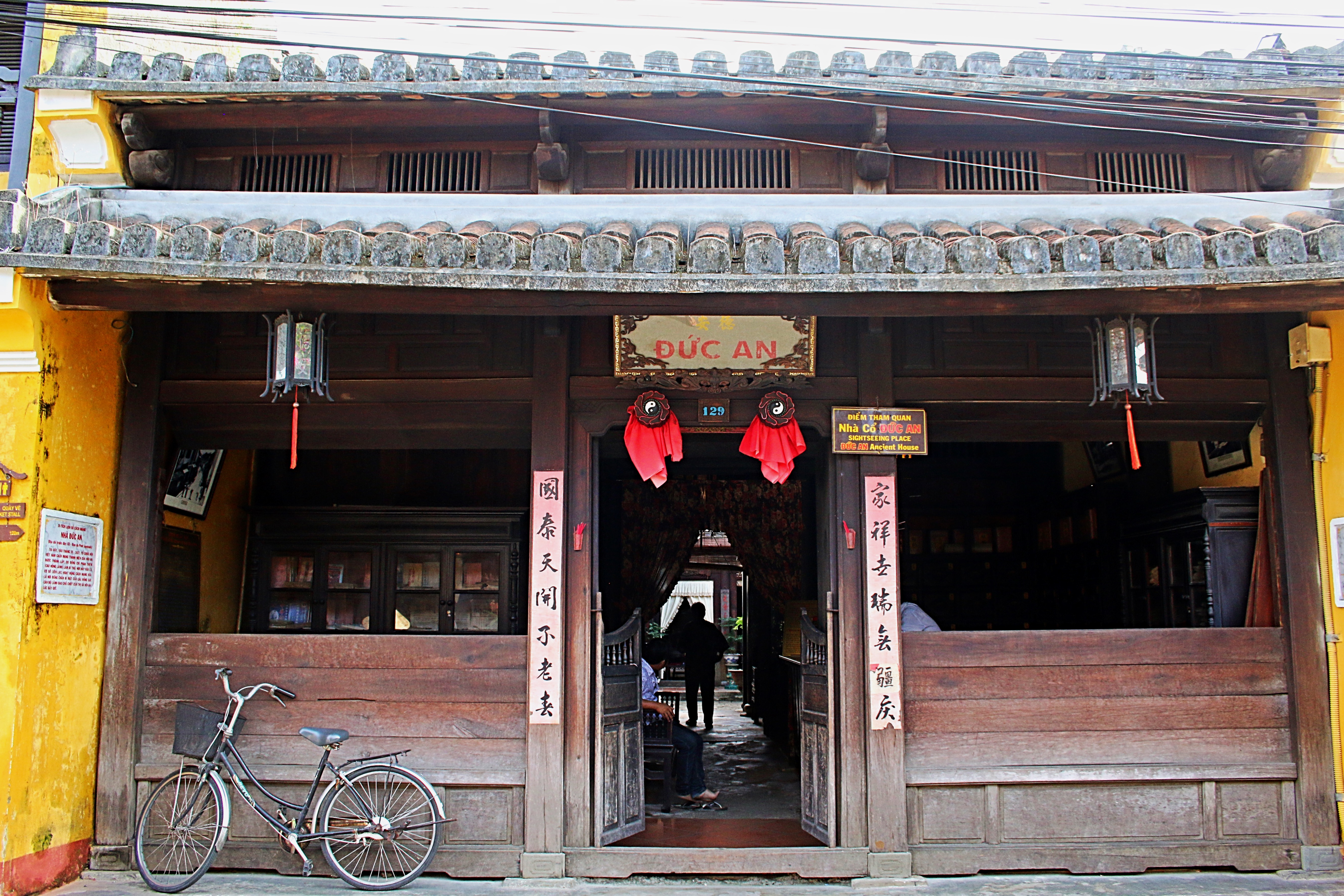
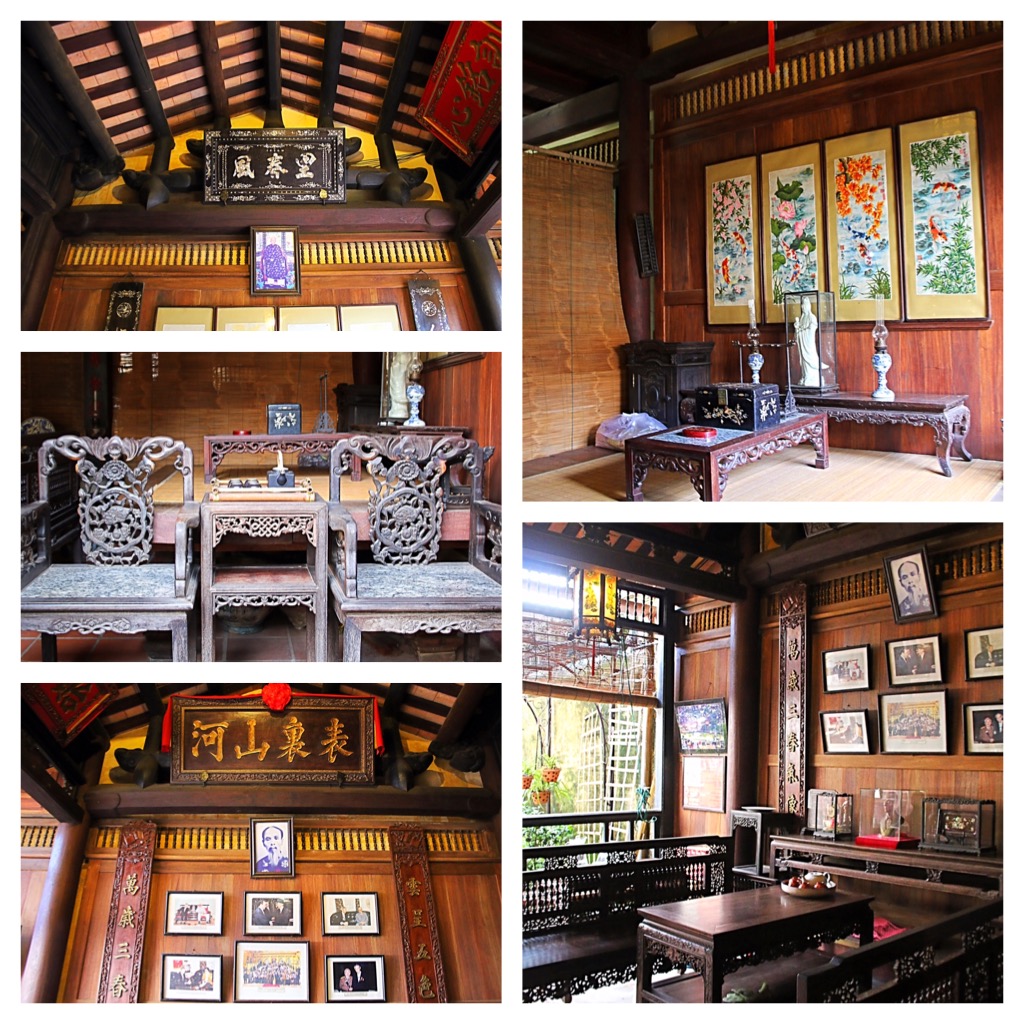
 The garden house, was designed in the traditional Vietnamese style, in an almost total square with an area of about 135 meters. We were able to take a seat, have tea and enjoy the beautiful woodwork and the family altar which is its centerpiece. There are also many precious relics of the Nguyen dynasty, including four horizontal lacquered boards with the words, “Van Vo Trung Hieu” (literature, military, loyal and pious), gifted by King Bao Dai in 1937, hanging in the middle room. Looking out of the open doors that line the front of the house onto the reflecting pond and the multitude of colorful, fragrant flowers, your feeling is one of peace.
 Our next stop, after re-boarding our dragon boat, was one that I was familiar with, Thien Mu Pagoda. One thing different from the day before, however, was that our guide gave us much information on the history of the pagoda and pointed out many items of interest, including the pavilion to the right of the tower which contains a stele (1715) set on the back of a massive marble turtle and the precious antiques in the main hall…bronze gong (cast in 1677) and wooden gilded boards with Lord Nguyen Phuc Chu’s inscriptions (1714). Another unusual item is an Austin car in which, monk Thich Quang Duc was driven to his death in Saigon in 1963.

 After our guide’s speech was complete, I decided that I would walk around the property and rephotograph everything since the day was much brighter than the previous one. After revisiting the main hall, I walked around the back of the structure and much to my surprise, realized that there was so much more to see. With the rainfall the day before and my haste to meet my driver in time, I must have not realized that the grounds extended far beyond. So…maybe coming back on the tour was not such a bad thing!

 We boarded the boat again and were served a nice lunch while continuing our cruise. Our next destination was a small, old pagoda, although I never caught the name. A rather quaint place, built onto the steep rocky banks of the Perfume, it was an interesting stop and had some very old relics inside of the temple.


 The first tomb on our tour was Minh Mang, about 12 kilometers from Hue. Construction on the tomb began in September 1840, however, only four months into the project, Minh Mang became sick and passed away. His successor to the throne, Emperor Thieu Tri, continued construction and Minh Mang’s corpse was buried in Buu Thanh in August of 1841. The tomb was completed in 1843.


 Moving along into the temple area, we found the Salutation Court, however, rain decided to hamper our progress as the skies opened up. We ducked in to the Sung An Temple after passing through the Hien Duc Mon gate. This temple is where the Emperor and Queen Ta Thien Nhan are worshiped and is flanked by Ta, Huu Phoi Dien (Left, Right Temples) in the front and Ta, Huu Tung Phong (Left, Right Rooms) in the back.


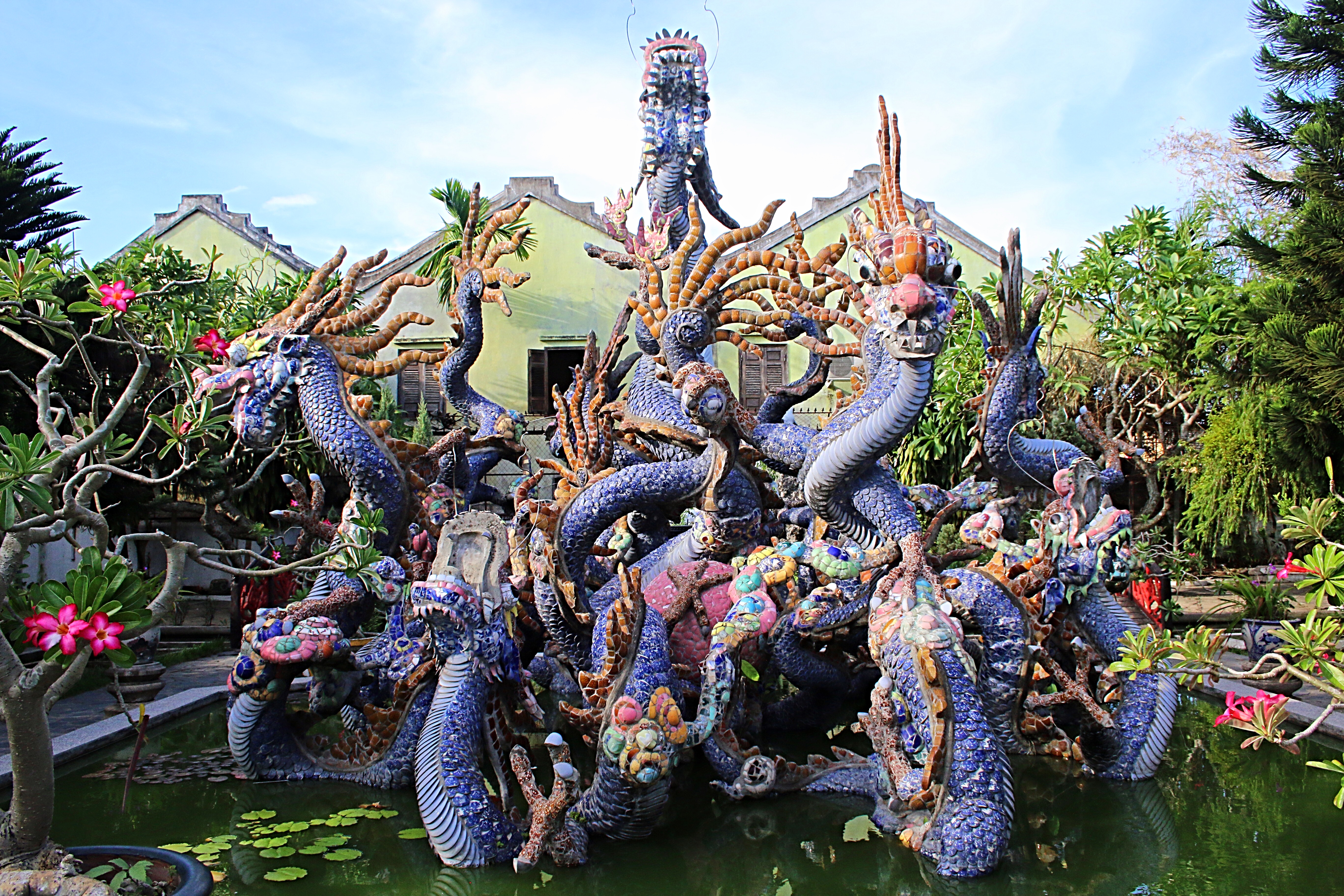
 One thing to notice when visiting Khải Định’s tomb is that it is much smaller than the tombs of his predecessors, however, undeniably more elaborate. The rectangular structure of the tomb leans against Chau Chu Mountain and is flanked by the largest sculptures of dragons in all of Vietnam. The tomb features an imperial audience court and twelve stone statues representing bodyguards. The interior boasts intricately designed glass and porcelain decorations on the walls and the ceiling is decorated with nine complex dragons. The rear room of the palace houses a temple containing the Emperor’s grave, an altar dedicated to him and a statue of his likeness, created in Marseilles.


 Our next stop was a roadside village where locals make sandalwood and cinnamon incense and traditional Hue conical hats. Colorful stalks of incense are bunched together, hanging on the walls, displayed in bins and some pieces are lit leaving a pleasant aroma in the air. Local women demonstrate the process for making the incense which is used in temples throughout Vietnam.
 After passing through the main gate, you notice to your right, the beautiful landscape and Luu Khiem lake. Located on the lake are Xung Khiem and Du Khiem Pavilions where the Emperor would frequent to admire flowers, compose poems and read books. We could hear music floating across the lake and noticed that a cultural performance was taking place. No time to stop, we continued on to the Hoa Khiem Palace (the Emperor’s working place) which is now the altar devoted to the Emperor and the Queen. Flanking both sides of the Palace are Phap Khiem House and Le Khiem House which were for the military and civil mandarins.
 To the rear of Hoa Khiem Palace is Luong Khiem Palace (the Emperor’s resting place), which was later used to worship the Emperor’s mother. The the left of the Palace is the Minh Khiem theater and Chi Khiem, the altar to worship the Emperor’s wives and Tri Khiem and Y Khiem Palaces, which were the accommodations of the Emperor’s concubines.


 Hue’s Orchid Hotel’s staff was extremely welcoming and within a few minutes, had me checked into my room and booked on a tour to the Royal Tombs for the next day. Delighted to find not only a beautiful basket of fruit in my room and a desktop computer for my use, I was ecstatic to find an actual window! Don’t laugh! Many hotels in Vietnam are built so close together, only the front and sometimes the back facing rooms boast windows, usually offered at a premium.
 Walking along the main road, many xe oms (motorbike taxis) slowed to ask if I needed a ride to the Citadel. Politely declining all, I finally agreed to one who also offered to take me to the Thien Mu Pagoda, wait for me and then deposit me at the front gates of the Citadel. We set off and after a short ride were parking near the souvenir stands lining the road near the pagoda.
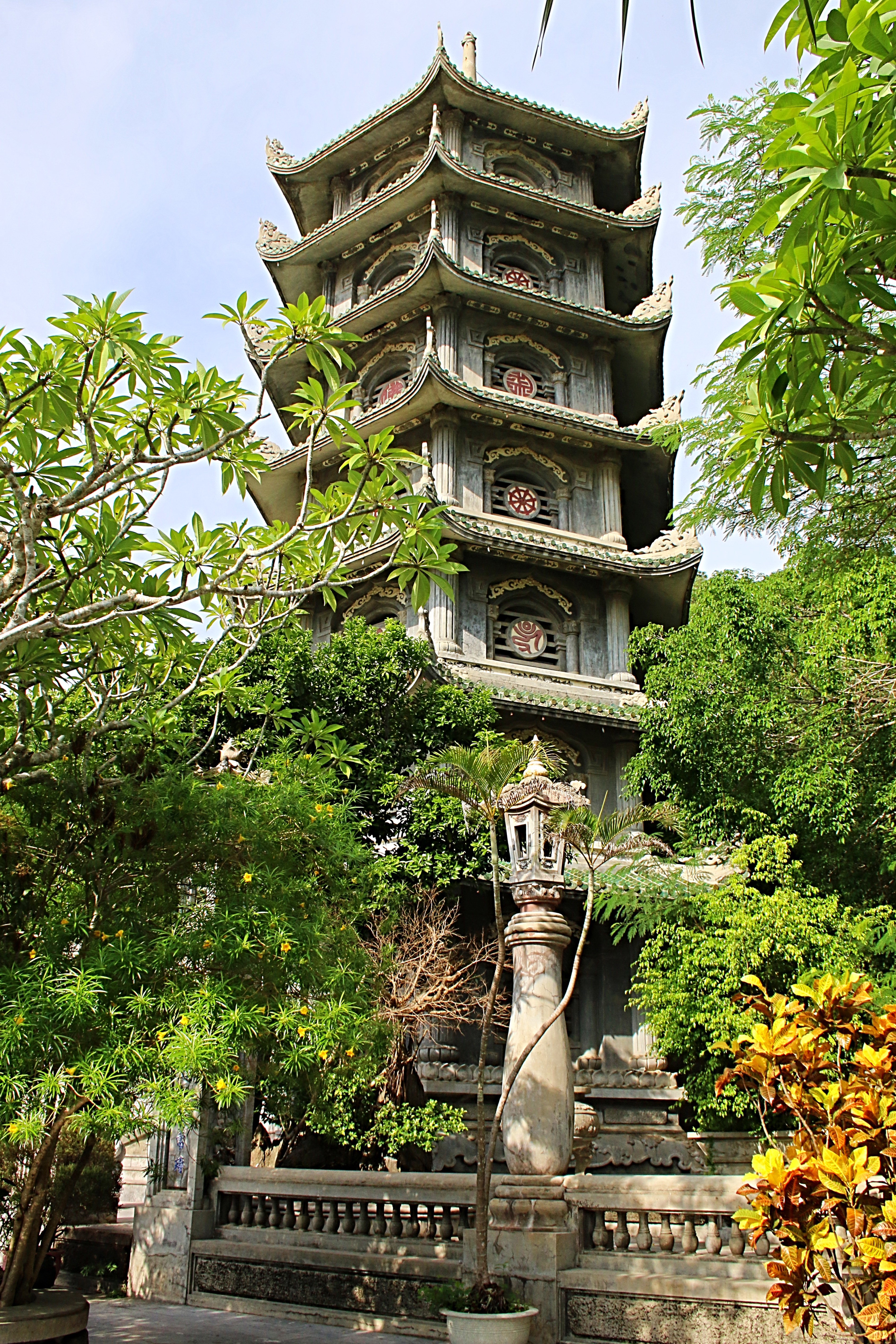
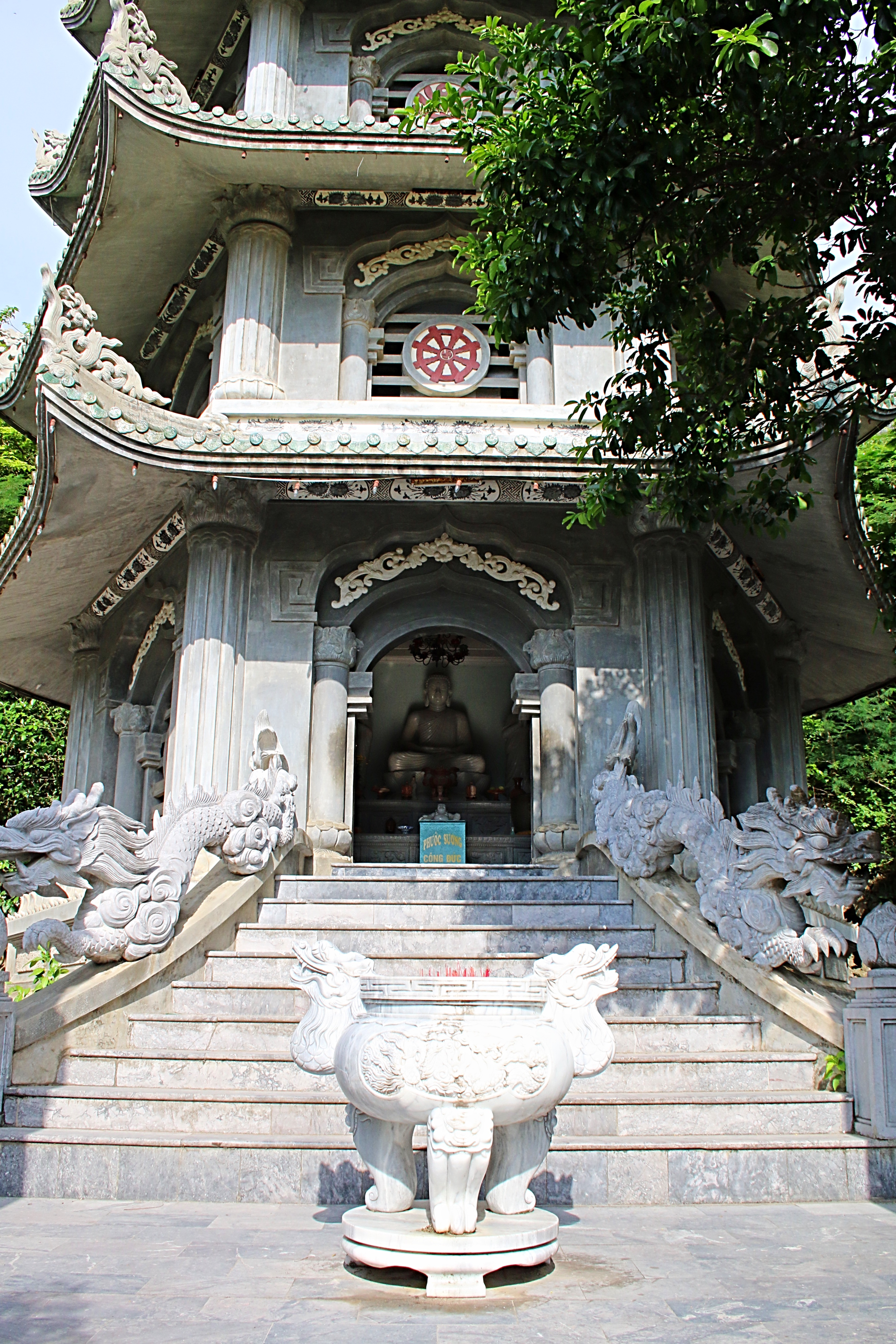
 Thien Mu Pagoda, sits on Hà Khê hill, about two miles from the Citadel on the Perfume River. Construction began in 1601 and it was later expanded and refurbished. The historic tower facing the river, known as Phước Duyên tower, has seven stories, each dedicated to a different Buddha, is the tallest religious building in Vietnam and sometimes recognized as the unofficial symbol of the city.

 A slight drizzle continued, but didn’t deter me from seeing the tower, the temple and gardens behind it and the large marble turtle, a symbol of longevity. Keeping a close eye on the clock, I walked throughout the premises, enjoying the pavilions with the large Buddhist guardians and the colossal bell, that locals claim can be heard from six miles away.


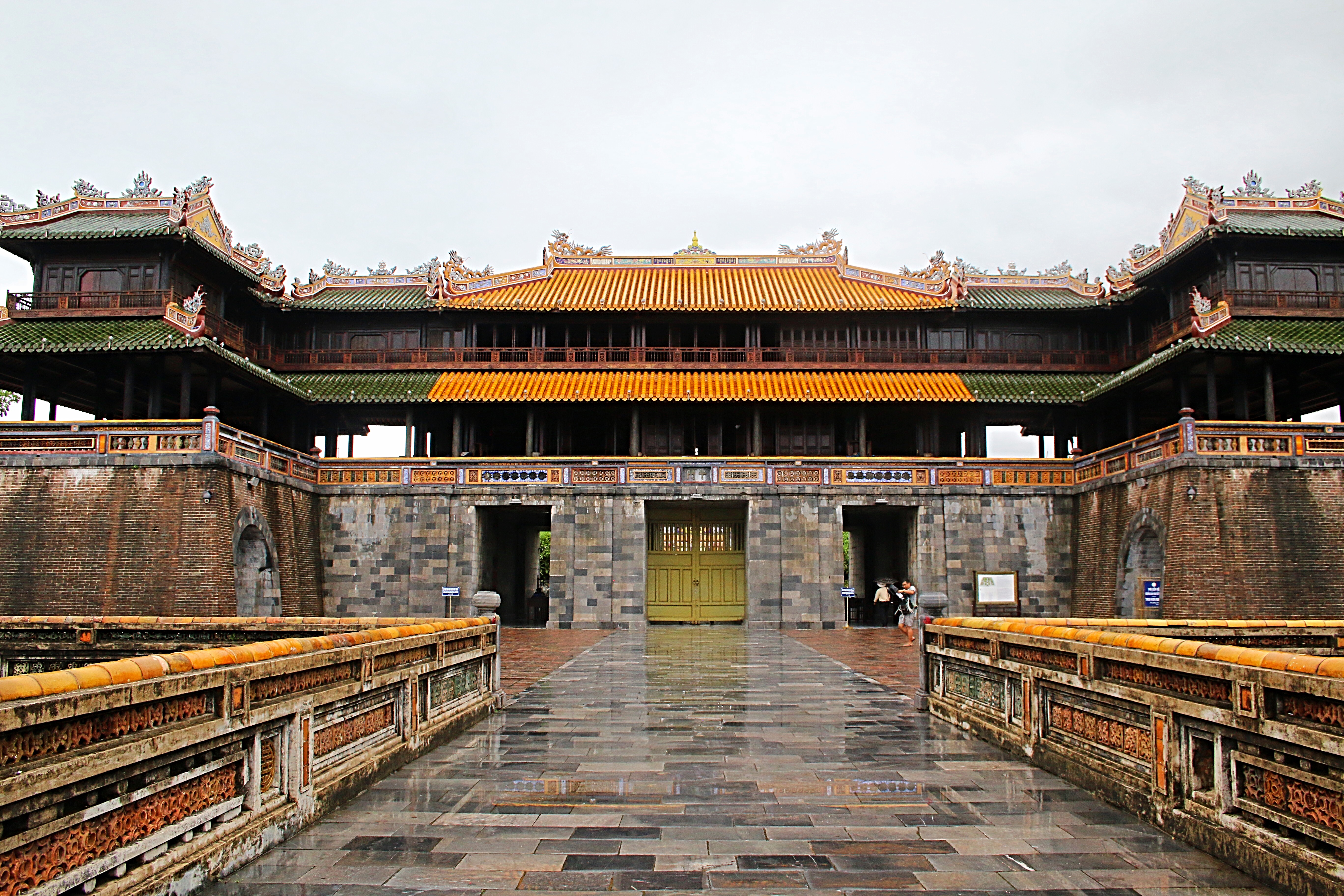


 This sprawling complex in Hue was where the Emperors of old would have lived and conducted all their business. There was even a part of the citadel known as “The Forbidden Purple City,” which, much like China’s Forbidden City, was reserved for only the most important people in Vietnam.

 Making my way to the Forbidden Purple City in the center of the Imperial Enclosure, I was saddened to see that almost nothing remained. Almost entirely destroyed by the war, a few walls and crumbled remains lay on the site. Once a glorious institution, Vietnam’s Forbidden Purple City rivaled and was designed to resemble China’s Forbidden City. This citadel-within-a-citadel-within-a-citadel was reserved for the personal use of the emperor and only his servants were allowed on the premises with the next outer section reserved for important ceremonies and the outermost for non-royal commoners.


 Walking back toward the front of the premises, I soon found myself near the main gate. Deciding to walk to the west, along one of the inner walls, I was surprised to find a whole other part of the citadel. There were many different compounds, each within their own walls with small lanes between them. Once again, I made my way toward the rear of the property, through each of them, enjoying the different pavilions and temples within.


 At the rear of the property, there was a lake and a bridge leading to another entrance gate (one of ten). Making my way along the lake I walked to the eastern part of the complex, again making my way forward.