© 2018 Snapping the Globe, L.L.C. All rights reserved.
Two forts, one city.
My favorite thing about San Juan is its two forts, Castillo San Felipe del Morro and San Cristobal. Having visited both two times before, you would think that I would look to find something else. Well, there are lots of other things in Old Town, but I never tire of these old structures…truly a photographers dream!
Castillo San Felipe del Morro and San Cristóbal, are two forts that were built to protect the city, the former from attacks from the sea and the latter, attacks from land.
Exiting our cruise ship, the first thing on my agenda was San Cristóbal. Near the port, I knew that it was a short walk that would take me through Plaza de Colón and to the gates of the fort. Starting early, to make the most of our short time in San Juan, I could beat the crowds, photograph to my hearts content, still stroll the city and also see El Morro.
Castillo San Cristóbal, a San Juan Historic Site, stands guard at the eastern gate, the land entrance, to the walled city of Old San Juan. After 149 years of construction, the fort was completed in 1783, although modifications were made throughout next century. The fortification covered about 27 acres of land, sitting on a hill originally known as the Cerro de la Horca, and basically wrapped around the city of San Juan allowing entry through its heavily guarded double gates.
Although the largest fortification built by the Spanish in the New World stood ready to defend the city against land attacks, not much action was seen. A land attack by the British in 1797 (under the command of Sir Ralph Abercrombe) did not make it as far as the fort and until 1898, the only dilemma was a 24 hour mutiny by soldiers living inside the fort against the Spanish crown. Finally, in 1898, the first shots of the Spanish-American War were fired when Puerto Rico was under military attack from U.S. Navy warships. Though the Spanish military attempted to retaliate, its old cannons and the fort could not withstand the assault, surrendering within 24 hours. Only six months later, Puerto Rico became a territory of the United States.
After Puerto Rico’s acquisition, the United States maintained an active military base at the fort with the additions of concrete pillboxes and an underground bunker control center during World War II. In 1961, once the U.S. Army vacated the premises, the U.S. National Park Service gained control and San Cristobal and El Morro were designated as museums and both were also declared as World Heritage Sites by the United Nations.
Over the years, with the city’s growth, part of San Cristóbal and a large segment of the city wall was was demolished to allow for flow of traffic in and out of the city.
The fort has two entrances, one off of Norzagaray Street and one off of Munoz Rivera Avenue. Since I was coming from the cruise ship terminal, I entered from the latter, however, the former is much more dramatic and one used by those coming from El Morro along the route near the water. If you choose to enter from Munoz Rivera, make sure to exit from other entrance to admire its sweeping ramp and grand appearance.


There are many things to see within the fort that can be observed with or without a guide. Three popular tours offered include, The Tunnels Tour which offer treks through the tunnels of the fort and include historical information about these hidden defenses, The Outworks Tour, which brings you to the outworks to see the land defenses and the The Lantern Light Tour, offered twice a week, which informs of soldier’s lives within the fort. In addition, every hour on the hour, free 20-30 minute Daily Orientation Talks are led by park rangers which explain life in the fort.
Since I had opted not to participate in one of the daily walks or tours, I was on my own with my map, looking forward to seeing all of the things that make San Cristóbal special.
Beginning with the short movie that is run continuously throughout the day, on the hour and the half hour (Spanish on the quarter and three quarters of the hour), I learned about the battles and the construction of the forts. Some of the relics from the forts times of battle are also on display in the Visitor Center.


Continuing through the long tunnel, I then found myself in the heart of the fort. There are so many passageways to explore, it is quite a bit difficult to determine, at times, which way to go. Some of the main items you want to make sure you see are:

Tunnel Systems: There are many tunnels to explore throughout the fort, one in particular, leading to the dungeon.
 Cisterns: These extremely large cisterns were used for the transport of water during the times of the Spanish Colony and also used as bomb shelters during World War II.

Santa Barbara Chapel: Located in the central plaza, the chapel was built for the fort’s occupants to offer prayers and worship. Santa Barbara is the patron saint of persons in danger of fire and explosions and for this reason, the chapel was especially important to the cannoneers working with their dangerous weapons.

Military Uniforms: A display of uniforms of the soldiers gives insight into how uncomfortable these men must have been in the Caribbean heat. Made of wool and/or cotton, they were layered and included coats and tights.

Living Quarters: Beds, uniforms and dining tables are displayed to show how the troops’ quarters looked when the fort was in use. Make sure to check out the window shutters with graffiti etched into it…ships, dates and Spanish words.
Cannon Balls: There are many piles of cannonballs, weighing approximately 200 pounds each, on the upper level of the fort.
 Flags: Check out the flags blowing in the breeze, the United States flag, the Puerto Rican flag and the Cross of Burgundy flag. The latter is a white flag with a red X and was t he Spanish military flag used from the 16th to 18th centuries to identify warships, forts and regiments of troops loyal to the king of Spain.

Sentry Boxes (Garitas): Located around the outer walls of the fort, the garitas offered a vantage point to watchmen who were guarding the shore. One particular garita, Garita del Diablo, located by itself close to the water in one of the oldest parts of the fort, is of particular interest to tourists. Legend tells that guards on duty in this garita, would disappear, taken away by the devel. Though stories must have run rampant during this time, it was more likely that the guards took advantage of the garitas remote location to escape. Though this sentry box is inaccessible to tourists, it can still be seen. There are many other garitas that can be entered and used for photo opportunities.


Outworks: To the east of the fort is a large stretch of lawn along with some buildings. This is the Outworks of the fort. Take a walk around the area to the the layers of defense (moats and walls) from a different perspective.
 With so much to enjoy here, take your time to see all parts of San Cristobal. In addition to the photo opportunities it provides within its walls, its city and coastal views are incredible! I could see both the Carnival Sunshine and Royal Caribbean’s ships docked as well as other beautiful buildings throughout the city. Make sure to stand along the water side and take in the panoramic views of the coast from Old San Juan to Condado and beyond…truly spectacular!

 After leaving San Cristóbal, it is approximately a one mile picturesque walk to Castillo San Felipe del Morro along Calle Norzagaray. Since I wanted to stroll through the center of town, doing some shopping along the way, I used Calle Fortaleza then, Calle Clara Lair to the Old City Gate. Walking along the outer walls on the Paseo de Morro, I walked along the water, looking out to El Canuelo, another smaller fortification on Goat Island, and made my way through the grounds of Castillo San Felipe del Morro to the front entrance.


Castillo San Felipe del Morro, or El Morro, as it is affectionately known, sits high atop a bluff overlooking the entrance to San Juan Bay. One of the largest fortifications built by the Spanish in the Caribbean, it took over 250 years to complete (1787) and was built to protect San Juan from invaders by sea.

After crossing the bridge to the fort, I showed my receipt from San Cristóbal and began my own tour of El Morro.

Castillo San Felipe del Morro, named in honor of King Philip II of Spain, lies on the northwestern-most point of the islet of Old San Juan. Construction of the citadel and its surrounding walls began in 1539, on orders of King Charles V of Spain, seeking a way to defend the port of San Juan by controlling entry to the harbor. The final design, drawn up in 1587, was based on Spanish military fortification principles of that time and similar structures can be seen throughout the Caribbean and Latin America in Cuba, Dominican Republic, Mexico, Panama, Guatemala and Honduras.
El Morro’s six levels rise from the sea to a height of 145 feet and offer an imposing sight to those arriving by sea. Nevertheless, El Morro suffered many attacks over the years, from the English in both 1595 and 1598 and from the Dutch in 1625. During the Spanish-American War, U.S. Navy ships fired upon El Morro, destroying the lighthouse. As mentioned above, the war ended with the Treaty of Paris, in which Spain ceded ownership of islands of Puerto Rico to the United States.


After the U.S. acquired Puerto Rico, many government buildings, including El Morro, became part of a large U.S. Army post, Fort Brooke. The large green space in front of El Morro was filled with a hospital, officer’s quarters, officer’s club and sports facilities. The U.S. Army also added a massive concrete bunker to the top of El Morro to serve as a Harbor Defense Fire Control Station, during World War II, to watch for German submarines.
In 1961, the fort became part of the National Park Service when the United States Army officially retired from the fort. Declared a World Heritage Site by the United Nations, the esplanade was cleared and restored giving citizens and visitors a wide open space to enjoy the sunny Caribbean days. Today you can see many people flying kites in the afternoon trade winds, a beautiful site with the castillo in the background.
While walking through the ancient fortification, make sure to take in the case mates, where countless arms were fired and the chapel, where no doubt many a soldier prayed for redemption and safety. As with San Cristóbal, check out the sentry boxes, or garitas scattered throughout the structures upper levels.


 My favorite part, however, is the restored lighthouse. Sitting 180 feet above sea level, the lighthouse was completed in 1908. On the upper levels you can also see the same three flags flown on San Cristóbal…the U.S. flag, the Puerto Rican flag and the Cross of Burgundy flag.


 Looking out at the massive grounds, the property spreads out along 70 acres, including the killing grounds and the esplanade. Nearby, you can see the nearby Cemetery of Santa Maria Magdalena de Pazzi.
An interesting fact about El Morro was that it was used as a film set in 1996 for the movie, Amistad, directed by Steven Spielberg, representing a fort in Sierra Leone, where slaves were auctioned in 1839. Interesting indeed, since slave labor was used to build El Morro.
Castillo San Felipe del Morro is a most amazing structure and if you arrive or depart on a cruise ship, you are in for a treat! In the afternoon sunlight, you glide right by the Old City Gate, Paseo de Morro and the regal El Morro perched high on its promontory. One of the most beautiful sights of Puerto Rico!

For more pictures, check out Facebook, Snapping the Globe and Instagram, @snappingtheglobe.
Castillo San Cristobal
- https://www.nps.gov/saju/index.htm
- San Juan, 00901, Puerto Rico
- Hours: Open daily, 0900-1800, closed Thanksgiving Day, Christmas Day and New Year’s Day
- Admission: Adult, $7.00, Children under 15 years, free. Admission covers entrance to both forts.
- Tunnels Tour: English, 1030, Wednesday, 1030 and 1430, Saturdays. Spanish, 1430, Wednesday and 1030 and 1230, Sundays. Approximately 1 hour, maximum group size, 15 people. Sign up at the front desk prior to the tour.
- Outworks Tour: Spanish, Saturdays, 1430, English, Sundays, 1430.
- Lantern Light Tour: Spanish, Sundays, 1800-1900, English, Tuesdays, 1800-1900. Ranger led.
Castillo San Felipe del Morro
- https://www.nps.gov/saju/index.htm
- Address: 501 Calle Norzagaray, San Juan, 00901, Puerto Rico
- Hours: Open daily, 0900-1800, closed Thanksgiving Day, Christmas Day and New Year’s Day
- Admission: Adult, $7.00, Children under 15 years, free. Admission covers entrance to both forts.
- Tours: El Morro, Keystone to Protection of the Spanish Empire Tour, English, Saturdays, 1030 English and Sundays, 1430. Spanish, Saturdays, 1430 and Sundays, 1030. Short informational talks are available every day in the main plaza of Castillo San Felipe del Morro
Make sure to wear comfortable shoes when visiting either of the forts as some of the flooring can be uneven, slippery and offer lots of stairways and bring lots of water, especially on hot days as the heat is intensified by the stone.


 As I made my way through the gate, I made a stop to inspect the sentry box on the coastal side of the wall. Following Paseo del Morro’s flawlessly paved path, I marveled at the waves sometimes pounding the shore on one side and the ancient wall on the other, repeatedly marked with garitas. At the end of my one and a half mile trek, I suddenly realized that the path ended. Many people will tell you that you should retrace your steps back to the San Juan Gate, however, along with a German family, I found an entrance to the grounds of El Morro fort, a remarkable structure that was next on my list.

 We noticed that our cruise itinerary included a stop in San Juan. Speaking with my travel representative, I was told at the time of booking that while Puerto Rico was still recovering, they were anticipating being able to accept tourists and cruise ships by the time of our arrival.


 Although a few buildings were still boarded up, I was pleasantly surprised to find that the most of the Spanish colonial buildings in Old Town appeared to be in good shape and open for business, their colorful architecture standing strong with Puerto Rican flags proudly flying in the morning breeze.


 Checking out our rooms, as we boarded the ship, we discovered nothing more than we had anticipated. Our boys’ room was outfitted with two twin beds plus a third pull-down bed from the ceiling and our room was rearranged into a king bed. Happy to find it clean and neat, we were thrilled to meet steward, Alexis, who did a wonderful job at accommodating two of our children’s late sleeping habits in his attempts to clean the room daily. He and the entire staff always had a smile and treated us with amazing towel animals!
 Initially, our time was spent exploring the ship, discovering where the things that interested us were located and attempting to enjoy some relaxation. It was nice to see the ship decked out for the Christmas holiday and we even added to the spirit of things by bringing our own Christmas trees, stockings and door decorations.


 Gym/Spa The gym area was well equipped and was not extremely busy when I visited. I did notice some classes that were offered, however, by the second morning, all spots had been signed for and only waiting lists were available. A walking track was also available on the upper deck, however, most people on this level did not seem to pay attention to the fact that some were trying to exercise, pulling chairs onto or walking aimlessly on the track. The Spa was located just before the gym and though we did not utilize any of their services, the waiting area seemed to be quite busy.
 Communication One of the challenging parts of being on a cruise is that you can’t use your cell phone to check in with your party…until now. Carnival developed a great app, Carnival Hub, for this purpose. After downloading the app, everyone can sign up and pay $5, for the entire trip, to use the app’s messaging system. After working out, it was awesome to just send a message to my husband to find where they were hanging out, instead of wandering aimlessly, hoping to find them. The other plus about this app is that there is no checking the paper schedules each day. Although they did still deliver these to your room (a huge waste of paper), I would imagine that the app will one day eliminate the paper schedules. At any time of the day, you could check the app for the planned activities and even see what meals were being served and where. The app also offered maps of the ship and access to your on board sail and sign purchases so that you could monitor them regularly instead of at the end of your cruise. Way to go Carnival!


 ‘After a few rain showers blew through and the skies decided to remain cloudy, I persuaded my family that we should drive into town to see the fort…the fact that there is a souvenir market next door and the promise of some cool t-shirts cemented the deal.

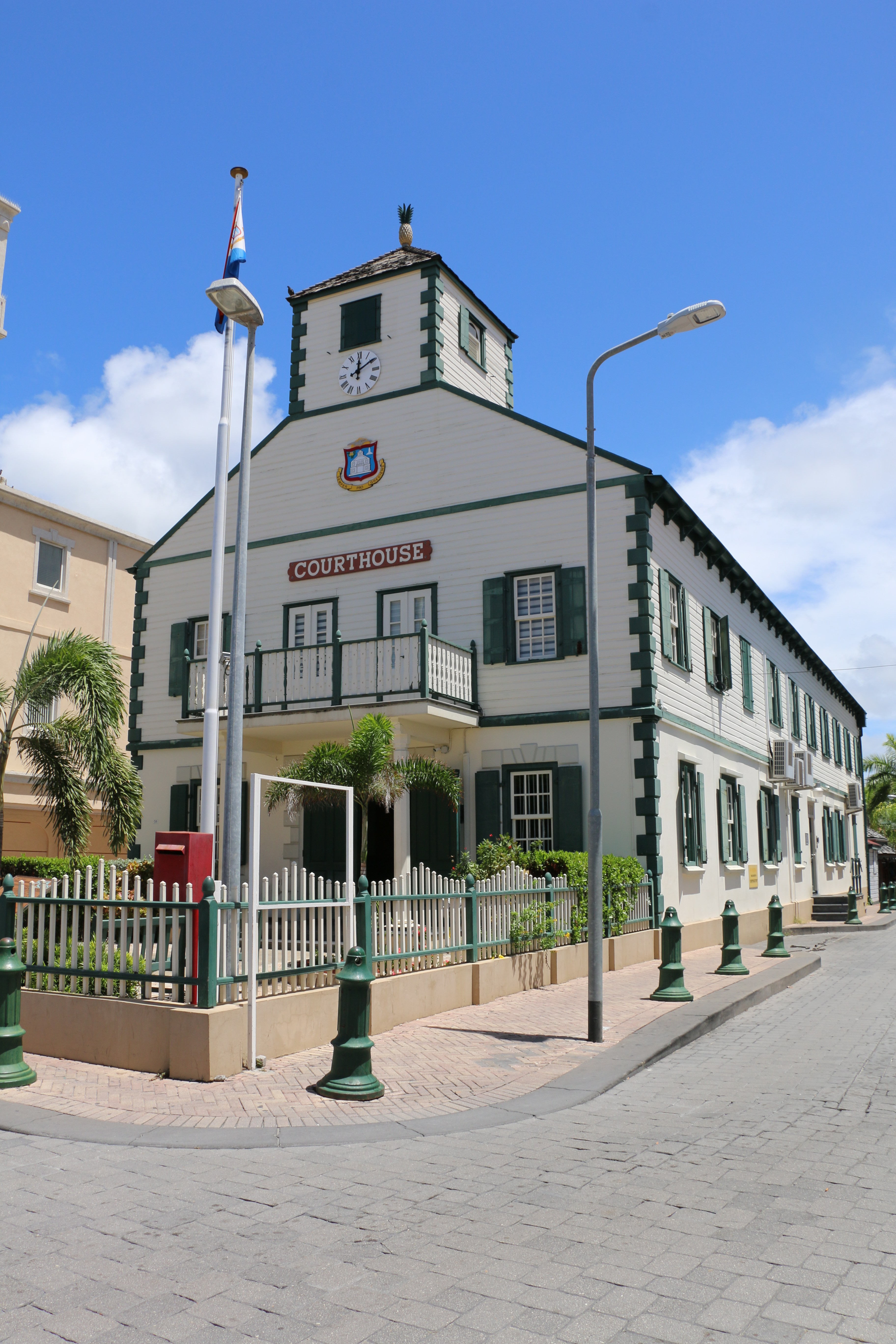
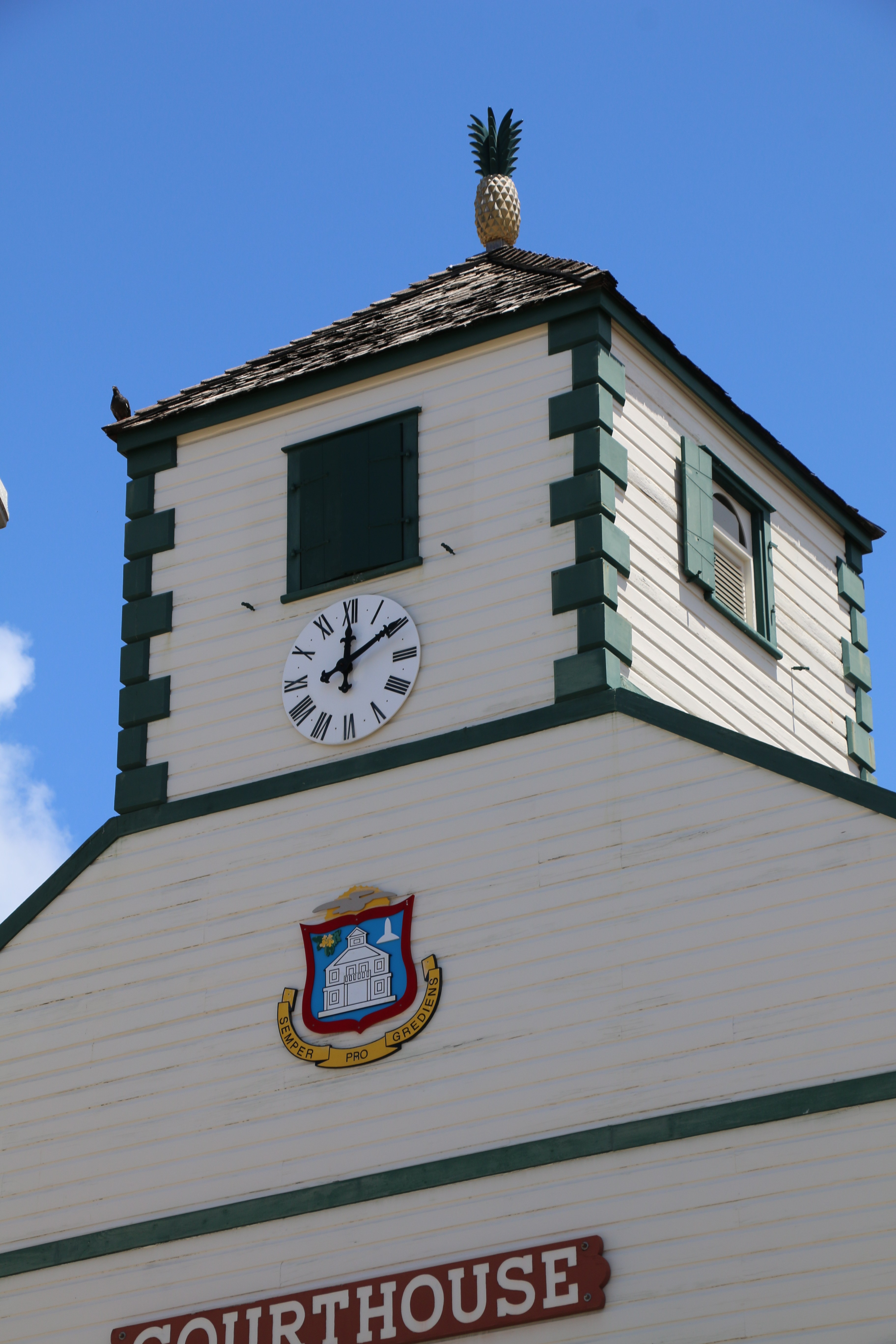
 A basic square structure with stone curtain walls and diamond-shaped stone bastions at the corners, the Tyygborg tower and north curtain were eventually demolished as well as other parts of the fort. The current Gothic Revival structure, with its Victorian clock tower, which serves as an entrance, was eventually built to replace the north curtain in the 18th century. Today, the bastions and the rooftop can be accessed as well as the living quarters that were later added.
 We enjoyed visiting the lower level which houses former cells, displays detailing the fort’s history, chapel and the living quarters. These areas are filled with antiques and gives an idea of the living standards at the time. We did not have a tour guide as we arrived just before three o’clock (last admitting time) however, having an escort would have been a benefit in learning more about the history of the structure and the role it played in protecting the island’s harbor.


 Though our condominium was located on stunning Sapphire Beach, known for its snorkeling, it was advantageous to have a car in order to experience some of the other beaches located throughout the island.


 Magen’s Bay public park was donated to the people of the Virgin Islands by Arthur Fairchild and consists of a one mile of white sand beach, a six-acre arboretum with trees from four tropical continents, a two-acre camping ground, five acres of coconut groves and fifteen acres of mangroves and wetlands. It is the only beach on St. Thomas that charges an admission fee which is used to maintain the facilities and the beach.
 After relaxing for a while, we then grabbed our snorkels and dove in, eager to see what was below the water’s surface. While our waters at Sapphire Beach offered an amazing amount of coral and marine life, sadly, Magen’s Bay did not. A bit more coral borders the rocky outcropping at each end of the beach, but the most impressive thing we encountered was the large, shoaling silver-side fish whose location was apparent by the diving seagulls.
 After Magen’s Bay, trying to decide on another beach was tough. Would any other measure up?

 If you get tired of the atmosphere here, you can wander next door to Coral World where you can come face-to-face with sharks and other underwater creatures. Swimming with sea lions or touching turtles…there’s much to learn about the underwater life that inhabits the waters around St. Thomas. Descend fifteen feet in the undersea observatory tower to marvel at the coral reef, schools of silversides and other fish or take an hour-long cruise on the park’s semi-submarine.